Retirement commonly triggers an identity crisis because work roles, routines, perceived value, and social circles change all at once.
Watch for signs like feeling invisible, struggling to answer what you do now, missing being needed, filling time with distractions, restlessness, and envy of people who seem to have figured retirement out.
Begin the rebuild by gaining clarity and redefining core values using guided prompts or a clarity workbook to ground choices in who you are, not what you used to do.
Expand dormant passions, test new roles, prioritize growth over productivity, and surround yourself with purpose-driven people to shape an aligned post-career identity.
Many are not emotionally prepared for this shift; take one small, intentional micro-step to build momentum and confidence toward a new, authentic identity.
Retirement is often painted as the grand reward – decades of hard work finally paying off with freedom and ease. But for many, retirement doesn’t just mark the end of a job, it marks the loss of an identity.The routines, responsibilities, and even small daily interactions that once gave your life structure and meaning suddenly disappear.And without that structure, it’s easy to feel like you’re drifting.Without purpose…In fact, in our own 2025 study about the biggest retirement regrets, 20.5% of retirees shared that they simply weren’t prepared for this part of the journey. As in, the emotional shift that followed. And for many, it wasn’t just about how to fill time, it was about what that time meant.This identity shift can stir up unexpected emotions: grief, restlessness, even a quiet sadness that’s hard to explain. It can feel like the version of you that once felt purposeful has gone missing. For instance, one respondent from our own 2025 Retirement Regrets study said:“If I could go back I would find my sense of purpose outside of my work identity.”And no one told you that part of retirement would involve rediscovering who you are.Here’s what’s true: the core of who you are hasn’t disappeared. It’s still there… just waiting to be uncovered in a new way.In this article, we’ll explore why identity loss after retirement is so common, how to recognize it, and most importantly, how to rebuild a sense of self that feels authentic, grounded, and full of purpose.
Why Retirement Triggers an Identity Crisis
For most of our lives, we’re taught to define ourselves by what we do. It’s so ingrained that when someone asks, “So, who are you?” or even just “What do you do?”, we usually answer with our job title.“I’m a lawyer.”“I’m a teacher.”“I’m a manager.”Somehow, your career becomes your shorthand identity. It’s how you introduce yourself, how others understand your role in the world, and often, how you understand yourself.So when retirement takes that title away, it’s not just a shift in your schedule, it’s a shift in who you believe you are.In fact, researchers describe retirement as “a psychosocial process of identity transition and search for meaning,” where the challenge lies in creating a new sense of self once the old one no longer fits.Here’s why that often leads to an identity crisis:
Your role disappears – work roles come with clear expectations, responsibilities, and feedback. Retirement removes that external framework, leaving many wondering where they fit in now.
Your routine vanishes – without the structure of a workday, time can suddenly feel endless. While freedom sounds great in theory, too much unstructured time can actually feel disorienting.
Your value feels unclear – our culture places so much emphasis on productivity that rest can feel like laziness. Without a “productive” role, it’s easy to question your worth.
Your social circles change – work relationships often fade after retirement, and building new social connections can feel harder without a shared role or purpose.
No wonder it feels unsettling when people ask, “How’s retirement going?”After 8+ years of private coaching sessions with pre-retirees and retirees, I have found that this question can cause a lot of anxiety. It’s as if there’s a self-imposed pressure to answer something that’s “productive” — something that shows off at least some sense of accomplishment or contribution.And that’s when the real retirement identity crisis starts to (invisibly) take its toll… when that high achieving level of go-go-go energy from your working era has no clear direction to take.Believe me when I say, you are not a stereotype — and the answers are typically not in the traditional volunteer roles or popular leisurely activities. Know that you’re not alone if you don’t feel like force-fitting yourself into stereotypical activities that traditional older adults partake in. You may just need to gain some important clarity on your post-career identity and recoup from a form of retirement identity loss. And also, check for these 10 signals.
10 Common Signs of Identity Loss After Retirement
Not everyone immediately realizes they’re going through an identity shift after retiring. Sometimes it shows up quietly, as a subtle undercurrent of restlessness or lack of motivation. Other times, it’s more obvious – like feeling totally untethered without a clear sense of who you are or what you’re supposed to be doing.If you’re feeling “off” and can’t quite explain why, here are some common signs that could point to a deeper identity loss:
You feel invisible or overlooked (especially in social settings where work used to define your role).
You struggle to answer the question, “What do you do?” because the old answer no longer applies, and the new one isn’t clear yet.
You miss feeling needed. Whether by a team, a boss, or a client. You might even feel guilty for not being as “useful” as you once were.
You no longer feel a strong sense of purpose or direction. The days blur together, and there’s nothing anchoring your time.
You find yourself filling time with distractions (TV, chores, scrolling) instead of activities that feel meaningful or energizing.
You’ve stopped setting goals or don’t feel excited about the goals you once had.
You feel restless, but don’t know what you want. You sense something is missing, but can’t define what it is.
You feel disconnected from your past self – almost like the person you were during your working years doesn’t match who you are now.
You avoid talking about retirement with friends or family because you’re unsure how to explain how you’re really doing.
You envy others who seem to have “figured out” retirement and wonder if you’re doing something wrong.
These aren’t just emotional bumps, they could be signs of a deeper identity transition.And while they can feel uncomfortable (or even scary), they’re also an invitation to explore what comes next. Retirement isn’t just about stepping away from work, it’s about stepping into a new version of yourself.
How to Rebuild a Post-Retirement Identity
While losing the identity you carried for decades can feel like a void, it’s also a powerful opportunity. More specifically, retirement gives you the space to stop living by someone else’s schedule or expectations, and start shaping a version of yourself that feels more aligned, more authentic, and more free.Here are a few ways to begin rediscovering who you are, beyond the job title.
#1 Gain Clarity & Redefine Your Core Values
When your career ends, it can feel like your compass disappears along with it. That’s why one of the most powerful places to begin rebuilding your identity is by reconnecting with your core values – the principles that guide your decisions, define your character, and make you feel most like you.These underlying values often get buried under decades of professional obligations, family responsibilities, and cultural expectations. But they’re still there, quietly shaping what lights you up, what frustrates you, and what gives you that deeper sense of “this matters.”Start by asking yourself:
What qualities or causes have always mattered to me, even outside of work?
When in my life have I felt most aligned, fulfilled, or proud?
What do I want to stand for in this next chapter of life?
You can start your reflecting session by gathering a list of values and then whittling it down to the top 5 that resonate the most. For instance, after over 8 years of retirement life coaching, I have found that these core values are trending among the top:
Accomplishment
Authenticity
Connection
Family
Flexibility
Freedom
Friendship
Honesty
Love
Personal Growth
Relationship
Spirituality
Truth
Take it a step further and go beyond listing your core values—you can ask yourself these foundational Finding Clarity Questions:
What core values do you want people to think of when they think of you?
(If applicable) Which core values do you want to pass on to your children and grandchildren?
What do others say about you and who you are at your core?
What inspires you the most?
What’s a significant event in your life that helped to define you?
Which questions resonate the most with you?When you reconnect with your values, you create a foundation that doesn’t rely on a job title or a daily to-do list. It’s about who you are, not what you do. And that’s where true fulfillment begins.If you’re unsure what your core values are now (or if they’ve shifted since you last checked in) our Finding Clarity Workbook can help you get clear on what really drives you.Either way, what has helped many of my clients and students throughout the years is gaining clarity before just “wingin’ it” (by the way, this is why Gaining Clarity is Step #1 in The Rewire Retirement Method book). Whether it’s my prompts or your own, careful dedicated self-reflection will only help you gain clarity on the deeper identity-related values.Maybe you’ve always valued creativity, but spent your career in a very structured, analytical field. Or perhaps you’ve had a lifelong drive to help others. All in all, with deeper clarity in retirement you will have the freedom and flexibility to do it on your own terms.
#2 Expand on Dormant Passions or Interests
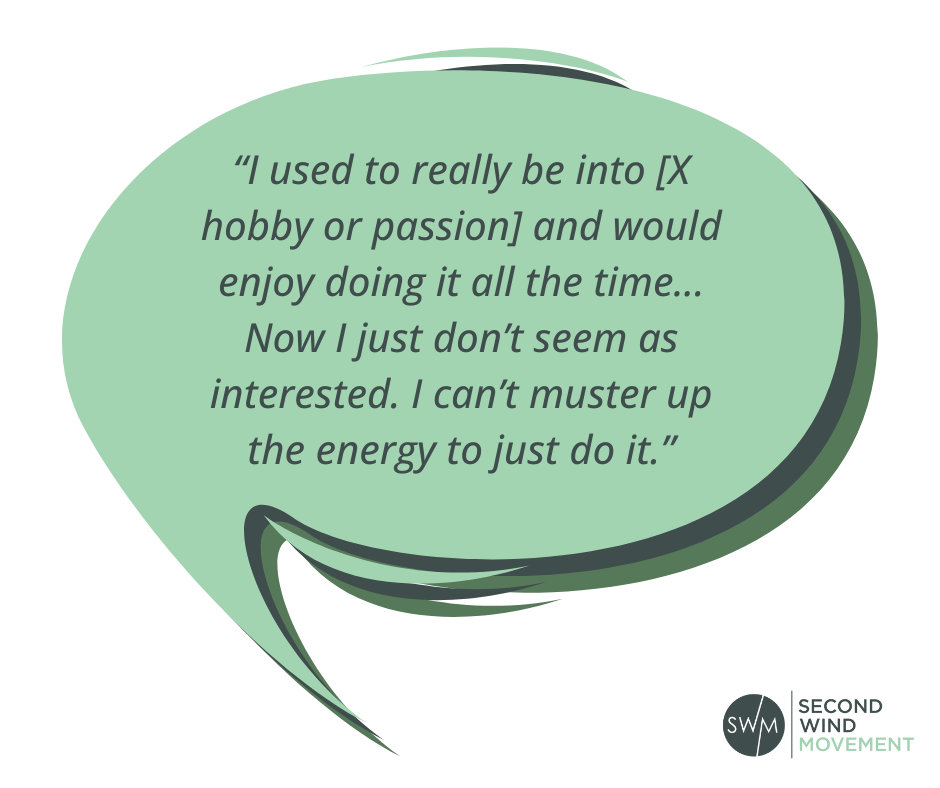
When life is full of deadlines, responsibilities, and routines, it’s easy to put your interests on the back burner. You may have told yourself “I’ll get to that when I have more time.”Now, in retirement, you finally do have that time, but reconnecting with long-lost passions can still feel surprisingly hard.Why? One reason is – after years of focusing on work and others, your own desires might feel unfamiliar. Or even indulgent because it’s not “productive.” But exploring what lights you up isn’t selfish, it’s essential for rebuilding a meaningful identity.In fact, a study published in the Journal of Organizational Behavior has shown that when your identity feels clear and integrated, you’re more likely to experience what psychologists call harmonious passion. That’s a self-directed, deeply fulfilling form of engagement that boosts life satisfaction, meaningful contribution, and social connection.On the other hand, when your identity is fragmented or overly tied to external roles, that same pursuit can feel more like pressure than joy. This is why clarity matters: it helps your passions feel energizing, not draining.A strong sense of identity leads to “harmonious passion” – the kind that energizes you, fuels growth, and adds meaning to your days.Maybe you used to sketch or journal before work took over your schedule. Maybe you’ve always loved animals, but never had the time to volunteer at a shelter. Or maybe you’re drawn to photography, hiking, gardening, or writing – interests that were quietly waiting in the wings.Caveat – there’s a common misconception that I often see among pre-retirees and retirees: when you find yourself having difficulty diving headfirst into a retirement passion, it’s not as simple as quick-fixing a scheduling or motivational issue. Often I hear about people “just not getting around to it” and “having challenges reconnecting with old passions.” For instance, I commonly hear, “I used to really be into [X hobby or passion] and would enjoy doing it all the time… Now I just don’t seem as interested. I can’t muster up the energy to just do it.”Answer – it’s about opening up to and exploring new activities, passions, hobbies, and interests in your new life stage with your new identity.You are designed to grow, change, and evolve throughout life… especially in retirement.(It’s my personal mission to flip the stereotype – that retirement is about a life of leisure only – on its head; it’s about arming yourself with tools to spiral UP into an authentic growth path as you age. Not about settling down into a sedentary lifestyle… but I digress).In short: Rather than simply revisiting old activities that used to interest you, double-down on the gaining clarity process and be totally open to new passions and lifelong learning. Don’t worry about finding the one thing that defines your post-retirement identity. The goal here is to follow your current curiosity, without pressure or perfectionism. Even dabbling in something small (a free class, a beginner’s book, a walk with a camera) can help spark joy and momentum.These passions don’t have to turn into a big project. It’s more about reconnecting with the parts of yourself that were left unexplored while your career took center stage while also being very open-minded about your growth path forward.
#3 Experiment with New Roles
One of the biggest myths about retirement is that it’s just about stopping… stopping work, stopping busyness, stopping growth. But in reality, retirement is simply a shift in roles. And the exciting part? Now you get to choose the roles you want to play — based on intrinsic motivators. This is where step #1 of gaining clarity and honing in on deeper core values comes in handy, instead of continuing to rely on external motivators (you know…money, career, achievement, and family).For decades, your role may have been closely tied to your job title or family identity – manager, teacher, parent, grandparent, provider… These were clear, externally defined, and reinforced every day. The opportunity for growth is to turn inward and explore new roles that stem from your internal space. And to literally rewire your brain for intrinsically motivated growth.It doesn’t happen all at once, either. The rewiring process takes time and repeated practice.Researchers have found that retirement is less like flipping a switch and more like entering a feedback loop. One where you try on new roles, see how they feel, and slowly craft a new identity based on what resonates.You try something new, see how it fits, and either reinforce who you are or revise that picture. You might experiment with a new role, like mentoring or volunteering, and if it feels meaningful, it strengthens your emerging sense of identity. If not, you pivot and try again.This back-and-forth process – intention, trial, outcome, reflection, revision – is how identity in retirement takes shape. It’s not a one-and-done decision. It’s more like editing a story as you go.Retirement identity isn’t formed overnight, it unfolds through small experiments and reflections. Each trial helps shape your evolving sense of self.Just like in your working years, this process might involve some detours, surprises, and revisions. And that’s a good thing.Because your identity isn’t fixed. It’s something you get to shape and evolve into, from a more intentional and free place than ever before.
#4 Prioritize Growth Over Productivity
For so many years, your days were probably measured by output – tasks completed, deadlines met, goals achieved. That productivity mindset can be hard to shake. And when it suddenly disappears in retirement, it can leave you feeling unproductive, unmotivated, or even a little lost.But here’s a powerful mindset shift:What if your worth doesn’t depend on how much you get done, but instead depends on how deeply you’re growing?Growth simply takes on new formats in retirement. It’s less about climbing a ladder and more about expanding from an inward aligned place.It might look like:
Learning something new (just because it interests you)
Taking time to reflect, rather than rushing to the next thing
Expressing yourself in a totally novel or creative way using new formats
Slowing down enough to appreciate beauty, joy, and presence in small moments
Having meaningful conversations that challenge or inspire you
Trying something that scares you a little, just to see what you’re capable of
When you stop measuring your value by productivity, you make room for purpose to emerge in more authentic ways. Purpose doesn’t always feel efficient day to day, but overtime, it often feels deeply right.If you’re feeling unmotivated or unsure of who you are right now, you’re not alone. It often lines up with what’s known as the disenchantment stage 3 of retirement – the phase when the excitement fades and questions around identity, structure, and meaning start to surface.Retirement is a journey. Most people go through stages – from the initial honeymoon to reorientation and, eventually, stability and growth.But that phase is just one part of a longer journey. As you start experimenting, reflecting, and reconnecting with what matters (by gaining clarity), you’ll shift into the reorientation stage, where things begin to feel clearer. Over time, that leads to a more grounded sense of stability, purpose, and deep satisfaction.So give yourself permission to be a beginner again, to meander a little, to explore from the inside-out without being insistent on the outcome.
#5 Surround Yourself With Purpose-Driven People
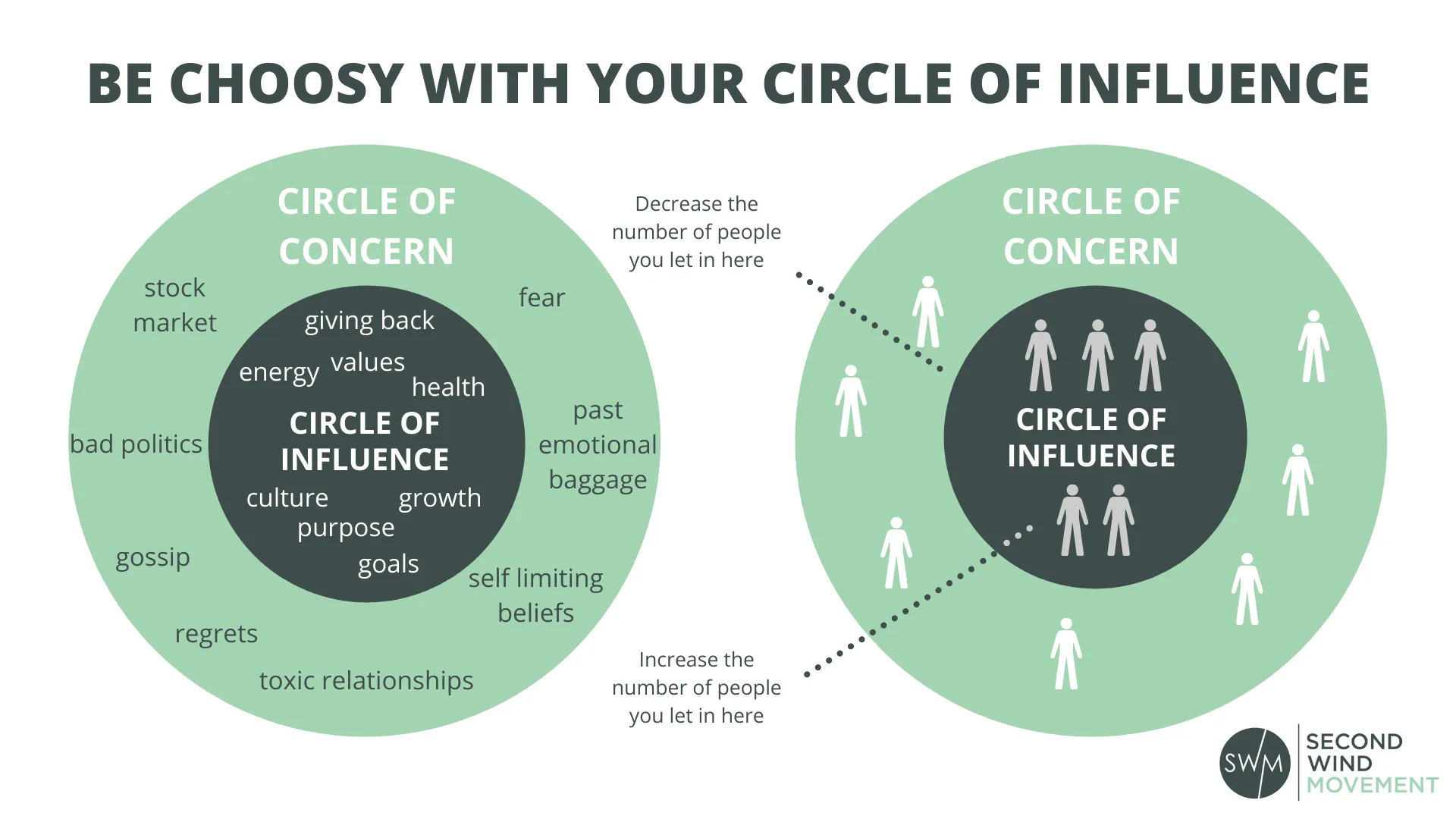
Rebuilding your identity doesn’t happen in a vacuum. One of the most underrated (yet powerful) ways to rediscover who you are is by surrounding yourself with others who are also asking meaningful questions and living with intention.Retirement naturally reshapes your social world. Casual connections fade – no more coworkers to chat with in the break room or acquaintances you saw regularly by default. What you’re left with is your inner circle. And that circle matters more than ever.A 2021 longitudinal study of 2,300 Finnish retirees found that peripheral connections (like coworkers and casual friends) tended to fall away during the first year after retirement. Meanwhile, close relationships with trusted friends and family remained stable, becoming even more central as the broader network shrank.Why does that matter? Because as your external world shifts, your inner circle becomes the primary lens through which you view yourself – and who you’re becoming. The people closest to you don’t just influence your mood or routine. They help shape your mindset, your identity, and the direction of your next chapter.If you’ve heard us talk about the Circle of Concern vs. the Circle of Influence, this is where it really comes into play. Keep in mind that you need to be picky when it comes to expanding your social circle.The Circle of Concern includes all the things you worry about but can’t control (like the news, gossip, fears, other people’s opinions, or aging itself). Your Circle of Influence, on the other hand, includes everything you can affect – your mindset, your actions, your challenges.Spending time with purpose-driven people deepens your Circle of Influence. It reminds you that you’re not powerless. You’re actively shaping your environment, your identity, and your impact.You don’t have to figure this out alone (and honestly, it’s a lot more fulfilling when you don’t).
Real Stories: How Others Rediscovered Themselves
Sometimes the best way to imagine what’s possible is to see what others have done with the same crossroads. Of course, not for the sake of mimicking their path (or anyone else’s), but to be inspired by the many possibilities and ways shift to an authentic role and growth path. Sally Lomanno from Philadelphia, for instance, experienced a “prolonged period of time …feeling really lost and extremely in need of a life direction.” She went looking for guidance, and rather than forcing herself into any stereotypical retirement roles, she landed on the systematic Rewire My Retirement process and came out the other end awakening her own authentic “remarkable journey of self discovery.”On her growth path she uncovered an internal passion for acting and quickly sprialed up into a new role that involved studying acting, practicing it, auditioning, and landing some rather impressive roles across a diverse range of opportunities. Chris Palmer from Bethesda, MD is another example of a successful identity shift from within. He retired at age 71 after a busy and fulfilling career as a filmmaker, professor, and author.How do you transition such a robust identity into retirement? By going inward for the clarity, of course. Yes, he too used the Rewire My Retirement system to discover and integrate his clarity yet his outcome is very different from that of Sally or anyone else in the program. What started as a handful of identity roles during his peak career and family life phase turned into even more multi-faceted robust identity roles in retirement. For instance, his author role didn’t stop – instead, it expanded into author of several different topics and Chris now shares several different passions and topics with the world through his writing (and in formats beyond books). In fact, he recently published his 10th book! Beyond writing books, here’s a sampling of his other growth pursuits in retirement, which take on a diverse portfolio of roles:
Dedicated husband – he prioritizes his relationship with his wife, focusing on joint activities like dancing, tennis, traveling, grandparenting, etc.
Father and grandfather – he nurtures his role as father and grandfather to his three daughters and grandchildren, hosting grandparent camps and teaching his grandkids new skills that he’s learning alongside them
Athlete – he exercises vigorously for an hour each day
Speaker – he gives back to the community by educating at local workshops and speaking gigs
Board member – he serves on local boards for causes that he believes in
Musician – he takes piano lessons and teaches his grandchildren how to play
Volunteer – he gives back at local hospice locations
While everyone’s retirement journey is unique, these stories reflect the kinds of shifts that happen when you let go of old roles and begin stepping into something more aligned.
Take the First Step to Your New Identity
If this journey feels big or overwhelming, that’s completely normal. Rebuilding your identity isn’t something that happens overnight – it’s a gradual unfolding. And like any meaningful change, it starts with one small step.Maybe that step is journaling about your values. Maybe it’s signing up for a beginner’s class or having coffee with someone you admire. Maybe it’s simply admitting to yourself, “I’m ready for something new.”You don’t need to have it all figured out before you begin. In fact, waiting until everything feels perfectly clear usually leads to more waiting. But taking just one small, intentional micro-step (even if you’re not sure where it’ll lead) builds momentum, confidence, and clarity.In case you’re intrigued by a relevant micro-step, watch this free masterclass on How to Turn Your Successful Career Into a Successful Retirement.Because retirement isn’t the end of your story. It’s the beginning of your most intentional chapter yet.
As a certified retirement life coach since 2018, Cyn has helped thousands of older adults turn their retirement years into remarkable years full of growth, purpose, and passion. Through her signature program Rewire My Retirement, she helps people achieve their best life across the 5 Rings of Retirement, which covers topics Growth, Community, Health, Giving Back, and Finance.
Cyn combines specific life coaching tools, neuroscience, and her extensive background in marketing (spanning 17 years) to make a powerful impact with Second Wind Movement – an organization dedicated to providing educational resources and coaching for seniors.
With meticulous research, insight, and passion, Cyn’s mission is to usher in a new wave of positive experiences for generations of retirees.
As a certified retirement life coach since 2018, Cyn has helped thousands of older adults turn their retirement years into remarkable years full of growth, purpose, and passion (beyond the stereotypical financial planning side of retirement).
She combines specific life coaching tools, neuroscience, and her extensive background in marketing (spanning 17 years) to make a powerful impact with Second Wind Movement – an organization dedicated to providing educational resources and coaching for seniors.
With meticulous research, insight, and passion, Cyn’s mission is to usher in a new wave of positive experiences for generations of retirees.

 And no one told you that part of retirement would involve rediscovering who you are.
Here’s what’s true: the core of who you are hasn’t disappeared. It’s still there… just waiting to be uncovered in a new way.
In this article, we’ll explore why identity loss after retirement is so common, how to recognize it, and most importantly, how to rebuild a sense of self that feels authentic, grounded, and full of purpose.
 No wonder it feels unsettling when people ask, “How’s retirement going?”
After 8+ years of private coaching sessions with pre-retirees and retirees, I have found that this question can cause a lot of anxiety.
It’s as if there’s a self-imposed pressure to answer something that’s “productive” — something that shows off at least some sense of accomplishment or contribution.
And that’s when the real retirement identity crisis starts to (invisibly) take its toll… when that high achieving level of go-go-go energy from your working era has no clear direction to take.
Believe me when I say, you are not a stereotype — and the answers are typically not in the traditional volunteer roles or popular leisurely activities.
Know that you’re not alone if you don’t feel like force-fitting yourself into stereotypical activities that traditional older adults partake in.
You may just need to gain some important clarity on your post-career identity and recoup from a form of retirement identity loss. And also, check for these 10 signals.
 These aren’t just emotional bumps, they could be signs of a deeper identity transition.
And while they can feel uncomfortable (or even scary), they’re also an invitation to explore what comes next. Retirement isn’t just about stepping away from work, it’s about stepping into a new version of yourself.


 Answer – it’s about opening up to and exploring new activities, passions, hobbies, and interests in your new life stage with your new identity.
You are designed to grow, change, and evolve throughout life… especially in retirement.
(It’s my personal mission to flip the stereotype – that retirement is about a life of leisure only – on its head; it’s about arming yourself with tools to spiral UP into an authentic growth path as you age. Not about settling down into a sedentary lifestyle… but I digress).
In short: Rather than simply revisiting old activities that used to interest you, double-down on the gaining clarity process and be totally open to new passions and lifelong learning.
Don’t worry about finding the one thing that defines your post-retirement identity. The goal here is to follow your current curiosity, without pressure or perfectionism. Even dabbling in something small (a free class, a beginner’s book, a walk with a camera) can help spark joy and momentum.
These passions don’t have to turn into a big project. It’s more about reconnecting with the parts of yourself that were left unexplored while your career took center stage while also being very open-minded about your growth path forward.


 On her growth path she uncovered an internal passion for acting and quickly sprialed up into a new role that involved studying acting, practicing it, auditioning, and landing some rather impressive roles across a diverse range of opportunities.
Chris Palmer from Bethesda, MD is another example of a successful identity shift from within. He retired at age 71 after a busy and fulfilling career as a filmmaker, professor, and author.
How do you transition such a robust identity into retirement? By going inward for the clarity, of course.
Yes, he too used the Rewire My Retirement system to discover and integrate his clarity yet his outcome is very different from that of Sally or anyone else in the program. What started as a handful of identity roles during his peak career and family life phase turned into even more multi-faceted robust identity roles in retirement.
For instance, his author role didn’t stop – instead, it expanded into author of several different topics and Chris now shares several different passions and topics with the world through his writing (and in formats beyond books). In fact, he recently published his 10th book!
Beyond writing books, here’s a sampling of his other growth pursuits in retirement, which take on a diverse portfolio of roles:
 While everyone’s retirement journey is unique, these stories reflect the kinds of shifts that happen when you let go of old roles and begin stepping into something more aligned.